
















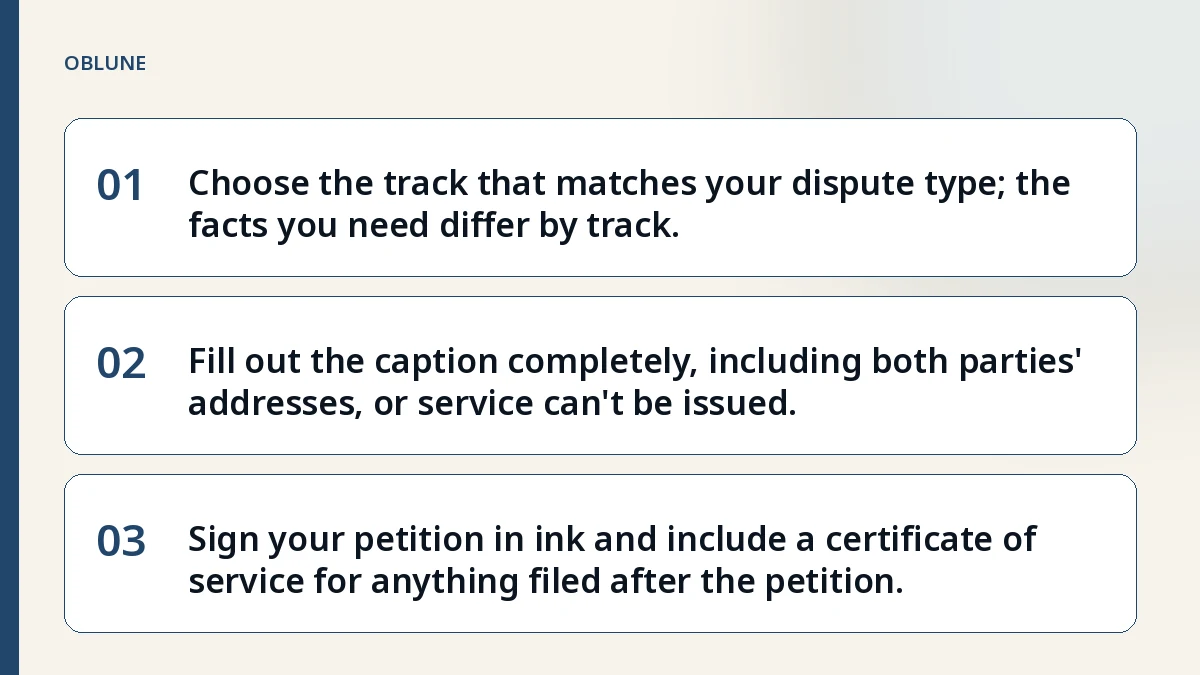
- 01Choose the track that matches your dispute type; the facts you need differ by track.
- 02Fill out the caption completely, including both parties' addresses, or service can't be issued.
- 03Sign your petition in ink and include a certificate of service for anything filed after the petition.
You're owed $500 for a repair, but the other side won't pay. Or your landlord filed an eviction notice. Or your new phone died after a week. Where do you start?
In Texas, many small disputes go to justice court, which handles claims up to $20,000 (not counting interest and court costs). The court has different "tracks" for different types of disputes. Each track asks for different facts. Picking the right track helps you file a clear, complete petition—and avoids the clerk sending it back for missing information.
This article walks through the tracks this service covers and what facts belong in each. You'll see how the same event can fit more than one track, and why it matters.
The Tracks at a Glance
Here are the dispute types this pack covers, with the key facts each one needs:
- Small debt claim: You're owed money. You need the amount, how you calculated it, and what you said to the other side.
- Eviction defense (tenant side): You're fighting an eviction. You need your own account of what happened, the notices you received, and the payments you made.
- Insurance claim dispute: Your claim was denied or delayed. You need the policy documents, the claim dates, and the correspondence.
- Consumer dispute: You bought a defective product or service. You need the purchase date, the defect dates, and what the seller replied.
- Property damage: Your property was damaged. You need the damage description, repair estimates, and the dates of each estimate.
- Unpaid invoice or services: You did work and weren't paid. You need the dates, work descriptions, and invoices.
These tracks aren't rigid boxes. A single situation can fit more than one. For example, if a contractor damaged your floor while fixing a leak, that could be both a consumer dispute and property damage. You'll choose the track that best matches your story.
Which Facts Belong in Each Track
Small Debt Claim
This is for money someone owes you. You'll need to state the exact amount and how you calculated it—for example, the unpaid invoice plus late fees. Then list every communication: who contacted whom, when, by what means (phone, email, letter), and what the result was.
Eviction Defense (Tenant Side)
You're the tenant, and you want to tell your side. Write a chronological account of what happened: when you moved in, when rent was due, what you paid, and any notices you got. The court needs your version of events, not just the landlord's.
Insurance Claim Dispute
Your claim was denied or delayed. You'll need the policy documents (or at least the policy number), the date you filed the claim, and every letter or email from the insurance company. The court wants to see the paper trail.
Consumer Dispute
You bought something that didn't work. List the purchase date, the defect dates, and what the seller said when you complained. If you have receipts or warranties, list them.
Property Damage
Your property was damaged. Describe the damage, then list each repair estimate with its date. The court wants to know the cost to fix things, so estimates matter.
Unpaid Invoice or Services
You did work and weren't paid. List each date you worked, what you did, and the invoice you sent. The court needs to see the work and the bill.
The Filing Basics: What Every Track Needs
No matter which track you choose, the petition has the same skeleton. The court pack gives these rules:
- Paper: Letter-size, 1-inch margins, 12-point font, double-spaced, numbered paragraphs.
- Caption: The court name, county, precinct, and both parties' full names and street addresses.
- Signature: You must sign in ink. An unsigned petition is struck.
- Copies: File the original plus one copy per defendant.
- Filing fee: The court sets the fee. If you can't pay, you can file a Statement of Inability to Afford Payment of Court Costs.
After you file, anything you send to the court must include a certificate of service stating when and how you delivered a copy to the other side.
A Checklist Before You File
- Pick the track that matches your dispute.
- Gather the facts that track requires (dates, amounts, documents).
- Write the statement of facts in chronological order, one numbered paragraph per event.
- List every communication between you and the other side.
- Attach your documents, numbering each one continuously.
- Fill out the caption completely—missing an address means the clerk can't issue service.
- Sign in ink and include your contact info.
- Make the copies and pay the fee (or file the inability form).
Where to Go Next
If you're ready to start, the guided preparation flow walks you through each step. You can also review the court page for Texas or read the procedural guides for more detail.
Remember: rules change, and the court's current instructions control. The clerk can answer questions about filing fees, format, and deadlines.
Check the filing format before you file
See what the court in your region asks for, and what a prepared package contains.
Common questions
What if my claim is for more than $20,000?
Justice court handles claims up to $20,000, not counting interest and costs. If your claim is higher, you may need to file in county court at law, but that court's limit varies by county—check the county's own limit before filing.
Can I represent myself in small claims court?
Yes, self-representation is allowed in justice court for small claims. You can file your own petition and appear without a lawyer.
What happens if I don't sign my petition?
An unsigned petition is struck. You must sign in ink on the signature line before filing, and include your printed name, address, and phone number.
What is a certificate of service?
A certificate of service states the date and manner you delivered a copy of a document to the other side. It's required for anything you file after the initial petition.
Official sources
General information about court filing formalities. Not legal advice, and no attorney-client relationship is created. Filing rules change; check the court's current published instructions before you file.